





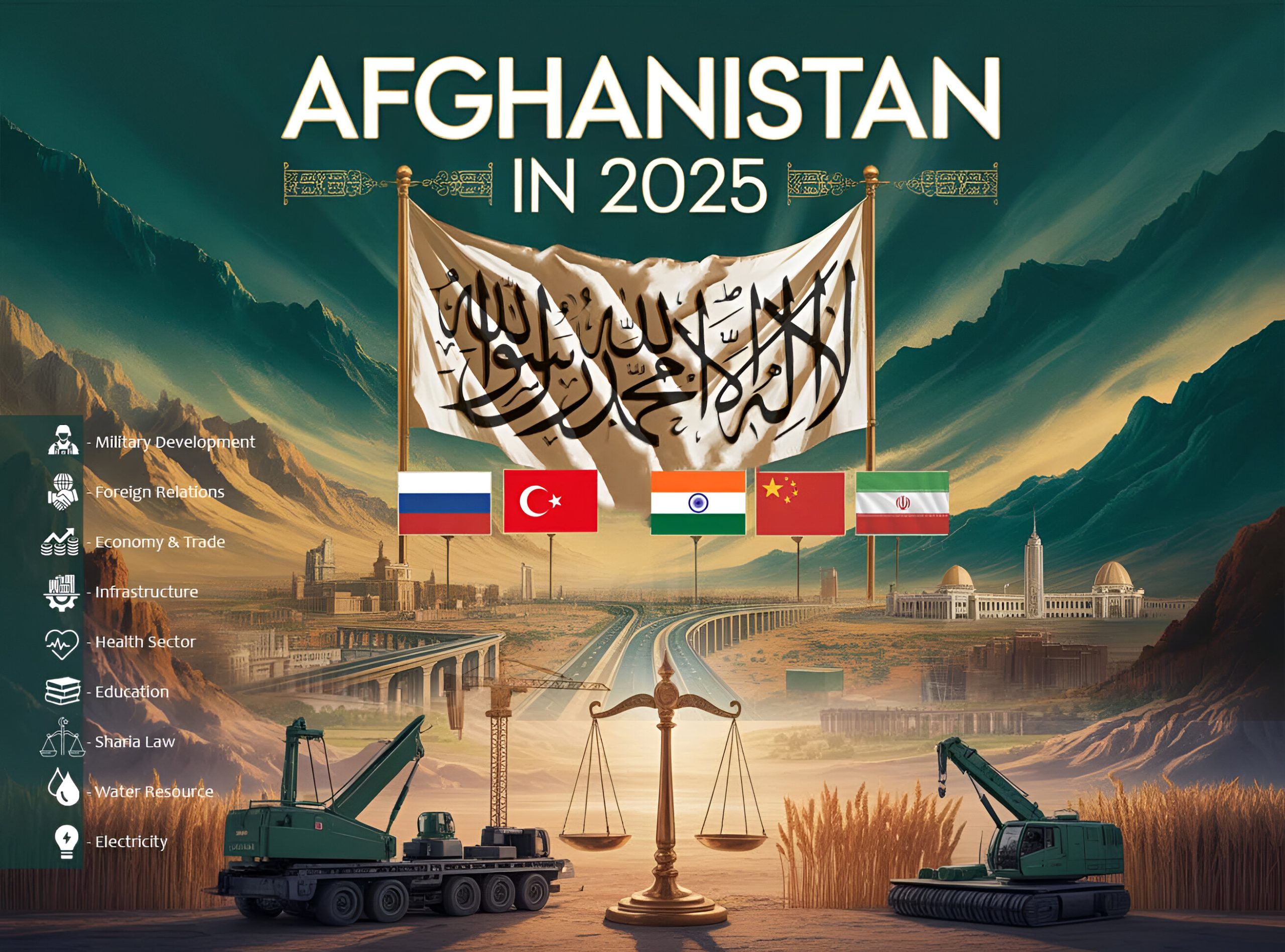
In 2025, the Islamic Emirate of Afghanistan achieved measurable progress across key sectors despite ongoing challenges. Advancements were made in social welfare, economic stability, infrastructure development, energy, transport, education, security, and foreign relations. Large-scale national and regional projects, improved macroeconomic indicators, and expanded diplomatic engagement contributed to stability, self-reliance, and improved public service delivery, laying a foundation for continued national development.
Below is the full report detailing the achievements and developments of the year.
1. Population Repatriation and Resettlement Sector
1.1 Return of Migrants and Refugees
During 2025, a total of 2,800,000 Afghan migrants and nationals returned to Afghanistan from foreign countries. The return process was effectively managed, with the majority of returnees resettled. Essential services were provided, and land distribution in planned townships is ongoing.
2. Social Affairs and Humanitarian Support Sector
2.1 Drug Addiction Treatment and Social Reintegration
During the year, 35,228 individuals suffering from drug addiction were treated nationwide and reintegrated into normal social life through structured rehabilitation programs.
2.2 Beggar Registration and Financial Assistance
In major cities, 10,664 beggars were collected, registered, and verified. Following assessment, a financial assistance scheme was introduced, allocating 2,000 Afghanis per person.
2.3 Support for Orphans, Widows, and Persons with Disabilities
The Ministry of Martyrs and Disabled Affairs allocated approximately 12.5 billion Afghanis in multiple phases to support over 600,000 orphans, widows, and persons with disabilities. Under this program, 2,000 Afghanis per beneficiary were distributed on a monthly basis.
3. Economic Sector
3.1 Macroeconomic Stability and Growth
Despite economic challenges, Afghanistan recorded notable stability:
- The Afghani currency remained stable and strengthened against foreign currencies
- Inflation declined
- Prices of food and essential goods remained lower than regional averages
According to the World Bank, Afghanistan achieved 4.3% economic growth in 2025.
3.2 National Economic Projects and Investment Management
Under the Economic Deputy Office of the Prime Minister:
- 22 major national projects were launched or handed over for utilization
- 20 additional project contracts were signed
3.3 Approved Investment and Procurement Projects
The National Procurement Commission approved 562 projects worth approximately 130.6 billion Afghanis across 33 meetings, representing a major step toward economic development and self-reliance.
3.4 Trade, Commerce, and International Economic Agreements
The Ministry of Commerce and Industry signed multiple agreements, including:
- Preferential trade and transit agreements with Pakistan
- A preferential trade agreement with Uzbekistan
- Economic and trade cooperation MoUs with Kyrgyzstan
- A cooperation roadmap with Kyrgyzstan
- An implementation plan with Uzbekistan’s Ministry of Investment, Industry, and Trade
- Joint economic and trade cooperation agreements with Iran’s Sistan and Baluchestan provinces
3.5 Industrial Development and Investment Environment
Afghanistan recorded active production in 24 industrial sectors, including agriculture, pharmaceuticals, food processing, handicrafts, and light industries.
A favorable environment was created for domestic and foreign investment in:
- Chemical industries
- Construction materials
- Machinery and metal industries
- Pharmaceutical manufacturing
- Printing, carpentry, paper production
- Food processing and light industries
4. Infrastructure and Development Sector
4.1 Water, Irrigation, and Dam Infrastructure
Major progress was achieved in water resource management:
- 9 large dams were completed or initiated
- 341 small check dams were constructed
- Work progressed on Bakhshabad Dam (Farah), Baltuni Dam (Paktika), and Omari Dam (Zabul)
- Cleaning of Shahi Canal (Laghman) and Nahr-e-Siraj Canal (Helmand)
- Kajaki Hydropower Dam spillway raised by 10 meters
4.2 Qosh Tepa Canal Strategic Project
- 95% completion of second-phase excavation
- 85% completion of canal headworks
- Initiation of 25 bridges, water-control structures, and culverts
4.3 Health Infrastructure Development
An order was issued for the construction of one 30-bed hospital in each district:
- Construction ongoing on up to 50 hospitals
- Preliminary work underway for additional facilities
- Total planned 318 district hospitals, significantly expanding healthcare access
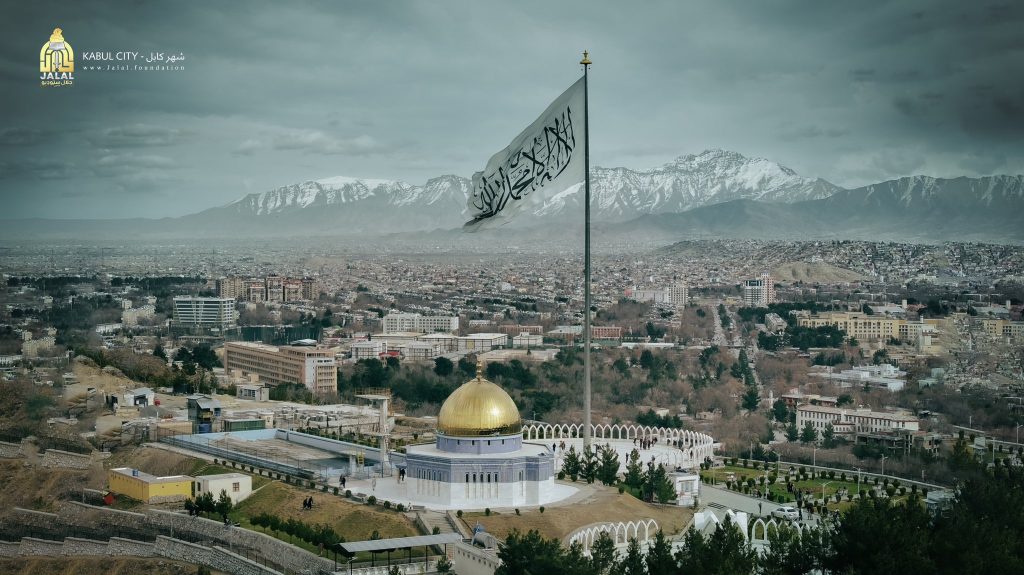
4.4 Urban Development – Kabul Municipality
- 375 municipal projects planned in Kabul
- 170 projects completed
- 205 projects under implementation, with Kabul Municipality responsible for funding or supervision
5. Energy and Power Sector
5.1 Electricity Generation and Transmission
- Initiation of dozens of megawatts of solar power
- Signing of a $10 billion MoU for 10,000 MW electricity generation
- Power generation and transmission contracts worth 20.7 billion Afghanis
- Agreements totaling 9,407 MW generation capacity
- Four electricity projects with Uzbekistan worth $243 million
- Electricity supply projects for Qosh Tepa and Darzab districts (Jawzjan)
6. Transport and Logistics Sector
6.1 Road and Highway Development
Major rehabilitation and expansion works began on:
- Kabul–Ghazni, Kabul–Nangarhar, Kabul–Logar second-lane roads
- Salang Pass and Wakhan Corridor
- Dozens of roads in first- and second-grade provinces
- Road extensions to remote districts
6.2 Railway and Regional Transport Connectivity
Efforts to connect Afghanistan with neighboring and regional countries through railway networks continued at a rapid pace.
7. Regional Connectivity and Strategic Transit Sector
Afghanistan strengthened its position as the shortest and most secure transit corridor between Central and South Asia.
Progress was facilitated on:
- TAPI
- CASA-1000
- TUTAP
- TAP
- Afghan Trans
7.1 TAPI Gas Pipeline Project
- 16 km of pipeline laid within Afghanistan
- Preparations completed for 87 km
- Remaining 66 km to connect the pipeline to Herat city
8. Education Sector
8.1 School and Madrasa Construction
The Ministry of Education constructed and inaugurated:
- 17 religious madrasas
- 221 modern schools
All facilities were built to standard and handed over for use nationwide.
9. Security and Defense Sector
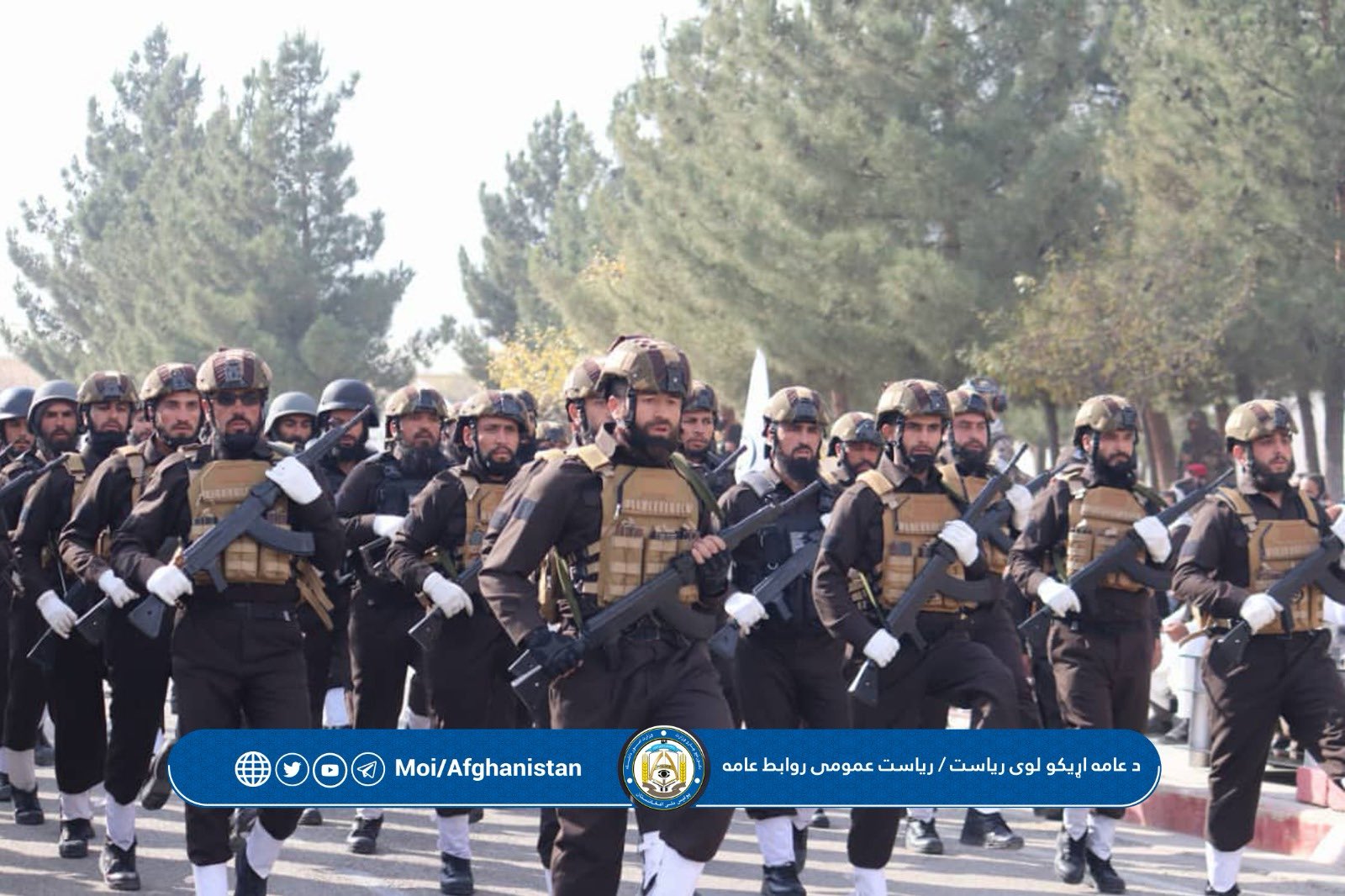
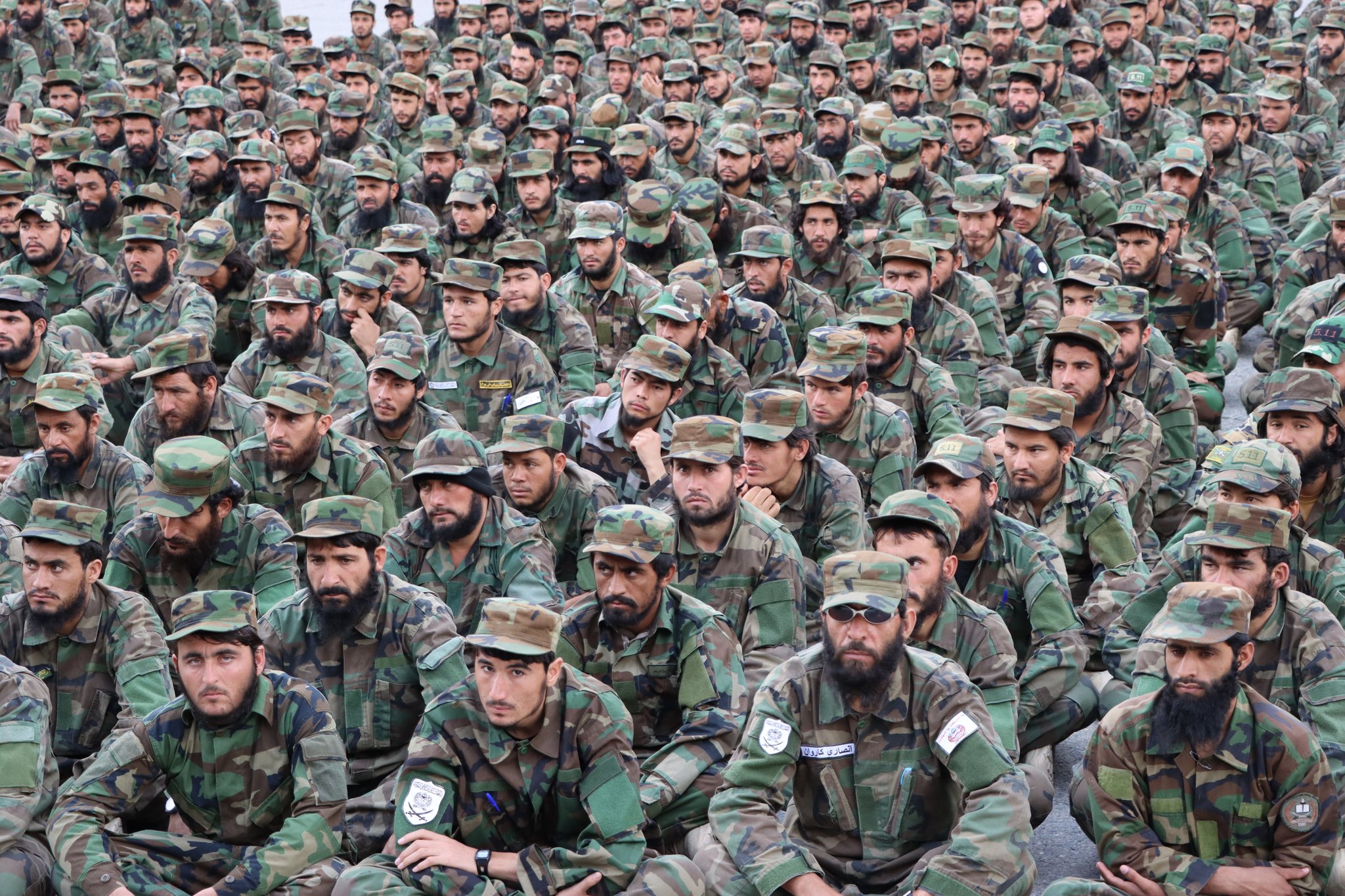
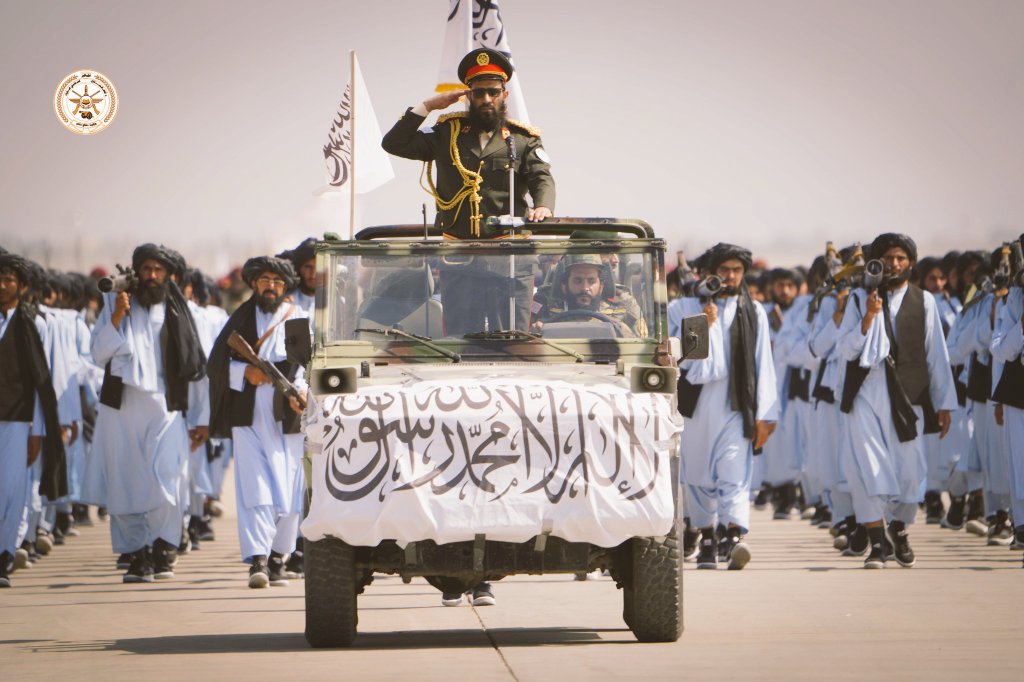
9.1 Defense Forces Capacity Building
- Trained personnel of the Ministry of National Defense reached 181,084
9.2 Police Training and Development
- 100,300 police personnel graduated in security, criminal investigation, border security, logistics, and related fields
10. Foreign Relations and Diplomacy Sector
10.1 Diplomatic Engagements and Recognition
- Official recognition by the Russian Federation
- 99 foreign visits by cabinet members, including deputy prime ministers and ministers
- Engagements focused on strengthening economic, trade, and diplomatic relations
Restoration and Maintenance of Military Assets
During the past year, the Ministry of Defense of the Islamic Emirate of Afghanistan carried out extensive restoration and repair activities across its various sectors and corps. Tens of thousands of military assets—including vehicles, armored equipment, aircraft, helicopters, weapons, artillery, and air-defense systems—were repaired and returned to operational use. These efforts reflect strengthened domestic technical capacity, improved maintenance capabilities, and an increased ability to sustain and preserve military equipment through internal resources.
Conclusion
In 2025, the Islamic Emirate of Afghanistan achieved tangible progress across governance, economic stabilization, infrastructure development, social welfare, and regional integration. These achievements demonstrate a strategic focus on self-reliance, stability, service delivery, and long-term national development, forming a foundation for continued progress.
NOTE!
The achievements presented in this report were initially shared by the Spokesman of the Islamic Emirate of Afghanistan (Zabihullah Mujahid) through multiple official posts and were later translated and compiled into a formal report by the Afghan Islamic website team.
1 Comment
Muhammad Ashraf Ebrahim Dockrat
January 7, 2026The Emirate of Afghanistan has to be congratulated on this on going progress. We pray that Allah Ta’ala takes this living example of shariah to the heights and aspirations of its people and leaders.