





Emerging Divisions Within the NATO Alliance
Afghansitan’s Hurriyat News Commentary
International political structures are largely built on shared interests and security needs. Within such frameworks, every alliance seeks to safeguard its influence and strategic position. However, an alliance faces discord when conflicts arise among member states over common objectives. Such clashes create fractures within alliances formed in the name of unity, gradually eroding their practical cohesion despite the appearance of harmony.
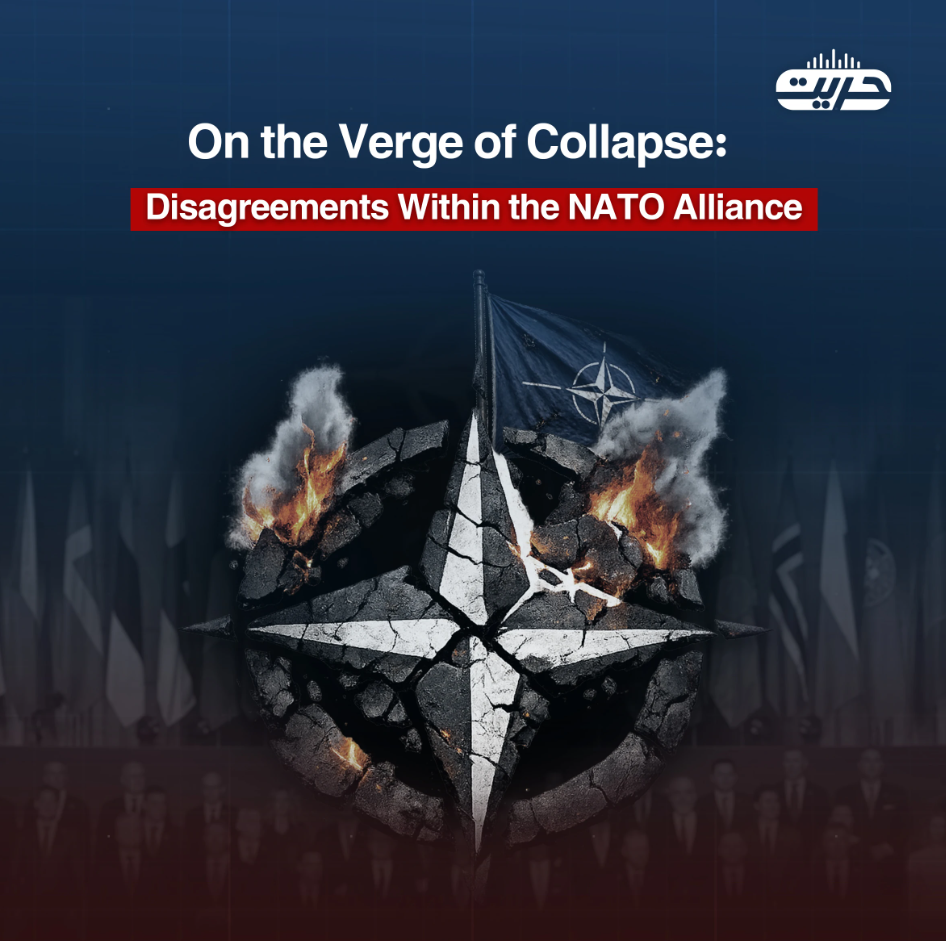
NATO, which for years portrayed itself as the world’s most powerful military alliance, now stands on the edge of a precipice, with serious questions being raised about its continuity and survival. Disagreements among member states over military spending, global conflicts, and political positions are growing by the day. Each side is increasingly prioritizing its own national interests. This has created visible rifts within the alliance, making it evident that NATO is no longer as unified as it once was.
The prolonged war in Afghanistan serves as a clear example of NATO’s strategic miscalculations and failed assessments. During nearly two decades of presence, extensive military operations, human casualties, and enormous financial costs yielded no meaningful results or benefits, raising major questions.
During this period, the United States and NATO suffered heavy human and economic losses. Tens of Thousands of thier soldiers were killed or wounded, and billions of dollars were spent in ways that produced outcomes contrary to expectations, with none of the declared objectives being achieved. This aimless engagement weakened NATO from within and has gradually set it on a path toward decline.
Currently, the ongoing tensions between the United States and Iran have further deepened these divisions within NATO. Washington seeks to manage this crisis under the umbrella of an international alliance, but in practice, NATO member states hold differing positions.
Some European countries fear the consequences of direct confrontation and are trying to distance themselves from the conflict, while the United States seeks to turn it into a shared responsibility. This divergence illustrates that NATO is now influenced more by conflicting calculations than by unified decision-making.
Similarly, demands by former U.S. President Donald Trump regarding the Strait of Hormuz further exposed divisions within NATO. Efforts were made to organize a joint response under the pretext of securing critical energy routes, but many member states were unwilling to involve themselves in a potentially large-scale war. European allies understand that the economic and security burden of such a confrontation would largely fall on them; therefore, some chose silence while others expressed opposition in measured terms. All this indicates that NATO members no longer view every U.S. demand as a binding alliance commitment.
Allah Almighty has referred in the Holy Qur’an to such forms of unity among disbelievers. Allah says:
“They will not fight you all together except within fortified towns or from behind walls. Their might among themselves is severe. You think they are united, but their hearts are divided; that is because they are a people who do not reason.”
This divine statement vividly reflects the condition of today’s global alliances: outwardly united, yet internally divided. Political disagreements within NATO, economic pressures, public fatigue toward wars, and shifting global balances are among the factors placing this alliance under serious strain.
Overall, the past experiences in Afghanistan and Iraq, along with the current tensions with Iran, show that divisions within NATO have deepened significantly. Recent disputes between NATO member states and Donald Trump over the Strait of Hormuz have further exposed the reality that the alliance is facing strategic disunity from within. An alliance that once claimed unity in joint operations is now distancing its members from one another during critical decisions. If these political disagreements persist, they are likely to result in NATO’s gradual decline.
Due to consecutive failures, war fatigue, and internal divisions, NATO is slowly drifting away from its original identity. If this trend continues, it is highly likely that NATO will gradually transform from an effective military structure into a symbolic and hollow political framework. In such a scenario, each member state would act primarily on the basis of its national interests, and the alliance would effectively lose its collective strength, influence, and global credibility, revealing a quiet but real decline of NATO.
Afghan Islamic translated
