


writen by Al-Emarah website,Translated by Afghanislamic website
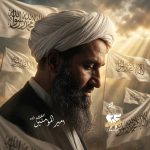
Note: The following article has been copied verbatim from the Al-Emarah website on the occasion of the eighth anniversary of the passing of Mawlawi Jalaluddin Haqqani (may Allah have mercy on him).
The great scholarly, jihadi, and political figure of the Islamic world who, throughout his entire life, neither bowed his head before tyrants, arrogant powers, and false deities, nor ever ceased confronting them. Through his strong determination and firm conviction, he played a prominent and historic role in the defeat of the Soviet Union. As a true Afghan Muslim, through his sacrifices he recorded the sacred history and culture of honor, dignity, and valor of Islam and Afghans in the pages of history, leaving future generations a golden chapter of jihadi resistance, unparalleled sacrifices, and enduring achievements.
His Birth
Hajj Mawlawi Jalaluddin Haqqani was born in 1363 AH, corresponding to 1944 CE, in the home of Khwaja Muhammad in Sarana village of Zazi District, Paktia Province. By lineage, he belonged to the Sultan Khel branch of the Mizi tribe of the Zadran.
His Education
From childhood, he possessed a special love for religion as one of his distinguishing characteristics. At the age of four, he began and completed his learning of the Holy Qur’an under his respected mother, Bibi. At the age of ten, he turned to other religious studies.
He began his primary studies at the age of ten under the renowned scholar of that time, Mawlana Muhammad Qasim (may Allah have mercy on him). Because of his intelligence and particularly good qualities, he was greatly loved by his teacher. During the continuation of his studies, he studied under many renowned scholars in various madrasas in Paktia, Zurmat, Shahikot, Paktika–Urgun, Ziruk, Ghazni, Shilgar, Koh Daman, Wardak, Ismail Khel of Khost, and other areas.
Respected Jalaluddin Haqqani, owing to his natural aptitude, was able to determine a clear destination for his future and prepare the provisions for his scholarly journey toward it. Thus, in pursuit of further knowledge, he continued his studies in various areas of Khyber Pakhtunkhwa, Kurram Agency, Tahl, Hangu District, and other madrasas.
For higher Sharia studies—the minor and major Hadith courses—he traveled to Darul Uloom Haqqania, Akora Khattak, known as the “Second Deoband.”
During a period of four years, he studied under the renowned shaykhs Mawlana Abdul Haq (may Allah have mercy on him), Mawlana Abdul Halim (may Allah have mercy on him), and Mufti Muhammad Farid (may Allah have mercy on him). In 1391 AH, he received the turban of graduation and his certificate of graduation with distinction from the institution. The shaykhs of the institution specially honored him with the following words and descriptions:
“The virtuous brother, Jalaluddin Haqqani, noble in character, commendable in conduct, pure in intellect, sound in nature, possessing penetrating insight, firm in creed, and fully capable of teaching the contemporary religious sciences…”
He also earned the distinction of being among the foremost and outstanding graduates of Darul Uloom Haqqania.
His Teachers of Religious Studies and Distinguished Scholars
Mawlana Muhammad Qasim, Mawlawi Badshah, Mawlawi Sayyid Hasan, Mawlawi Nader Khan, Mawlawi Khwaja, Mawlawi Zarkalim Khan, Mawlawi Asil Khan, Mawlawi Abdul Wahab, Mawlawi Akhtar Jan, Mawlawi Muhammad Ayub, Mawlawi Abdul Rahman, Mawlawi Sayyid Sultan Bacha, Mawlawi Abdul Halim, Mawlawi Abdul Ghani, Mufti Muhammad Farid, Mawlawi Muhammad Ali, Mawlawi Nasir Khan, Mawlana Dr. Shir Ali Shah Madani, and Mawlana Abdul Haq—may Allah have mercy on them all.
Among the students of respected Haqqani, a number of prominent scholars and shaykhs emerged and became sources of major service to religion and knowledge. By way of example, these included Shaykh al-Hadith Mawlana Altaf al-Rahman of Bannu; Shaykh al-Hadith and former member of the Pakistani Parliament, Mawlana Gohar Shah of Charsadda; Shaykh al-Hadith Mawlana Ghulam Muhammad Sadiq; Professor Mawlana Muhammad Shafi; and Shaykh al-Hadith Mufti Sultan Umar, the head teacher of Jamia Manba al-Uloom and a resident of Khost Province.
His Teaching
Hajj Mawlawi Jalaluddin Haqqani began his teaching career at Darul Uloom Haqqania, Akora Khattak. Although it was not customary at Darul Uloom Haqqania for newly graduated students to teach at the same institution, because of Haqqani’s scholarly aptitude, piety, insight, and exceptional good character, all the teachers of Darul Uloom Haqqania, particularly Mawlana Abdul Haq (may Allah have mercy on him), insisted that he serve as a teacher at Darul Uloom Haqqania.
In his first year of teaching at the aforementioned institution, he taught Mukhtasar al-Ma‘ani, Diwan al-Hamasah, Shafiyah, Sharh al-Tahdhib, and a number of other books. The leadership and administrators of Darul Uloom Haqqania had planned to assign him a number of additional advanced books to teach in the following year.
His First Journey for Hajj
However, Mawlawi Jalaluddin Haqqani respectfully declined their offer, based on the political, scholarly, and other needs of his country and society. He decided to devote all his scholarly capabilities to serving his country and society.
In 1393 AH, corresponding to 1352 Solar Hijri, he traveled overland to perform Hajj and fulfilled the obligation of Hajj. During this journey, he held detailed discussions and exchanged views with leading scholars and shaykhs from various countries of the Islamic world, including Afghan scholars, concerning the struggle and movements against disbelief and atheism.
His Political Struggle
After his blessed journey for Hajj, when he returned to Afghanistan, the final days of the monarchy were approaching, while democracy had already been declared. During the period of the monarchy, the impure ideas and movements of communism and Marxism had emerged and were rapidly spreading.
Mawlawi Haqqani therefore began organizing major gatherings in Greater Paktia with the support of tribes, communities, and religious scholars. He arrested many Khalqis and Parchamis and compelled them to repent.
The Coup of Daoud Khan and Its Aftermath
On 26 Saratan 1352 Solar Hijri, when Daoud Khan came to power through the “White Coup,” a number of communists were appointed to major positions and sectors. At that time, two movements emerged against the communists: one was a movement of religious scholars, guided by the shaykhs and scholars of Kala Jowad; the second was a movement of students known as the Youth Islamic Movement.
Accordingly, with the permission of the elders of Kala Jowad, including Hazrat Zia al-Mashayikh and other distinguished scholars, Hajj Mawlawi Jalaluddin Haqqani, accompanied by the great mujahid Mawlawi Nasrullah Mansur, as well as Mawlawi Fathullah, Mawlawi Nizamuddin, Mawlawi Ahmad Gul, Mawlawi Aziz Khan, and Mawlawi Muhammad Hasan, openly opposed the increasing activities and spread of communist ideology during Daoud Khan’s government. They came into the field and began their activities practically in Greater Paktia, Kabul, and some other provinces.
At that time, Mawlawi Jalaluddin Haqqani was teaching at Madrasa Rahmaniya of Mawlawi Ahmad Gul in Nika Zadran, while Mawlawi Fathullah Haqqani was teaching at Madrasa Habibiya in Tora Khel. With their assistance, Haqqani continued a major movement against communists and atheists. The central location of the movement was Madrasa Habibiya of Tora Khel.
A number of other activists, including Gulbuddin Hekmatyar, Mawlawi Nizamuddin Haqqani, Mawlawi Nasrullah Mansur, Mawlawi Ahmad Gul, Matiullah Khan, and Muhammad Ibrahim Haqqani, also came to this place for consultation and advice.
During the Daoud Khan regime, communist circles sought to eliminate Mawlawi Jalaluddin Haqqani along with other Islamic activists. In this connection, a 500-member police force from Zindarami raided the home of Hajj Mawlawi Jalaluddin Haqqani to arrest him. However, through a special tactic, he successfully escaped from the house with his biological brothers, Muhammad Ibrahim Haqqani, Muhammad Ismail Zabih, and Khalil al-Rahman Haqqani.
Because of this necessity, he went with his family and brothers to the Garoba Mountains and settled there. After several weeks, at the encouragement of communist circles within the government, the government prepared and dispatched a force, with the support of the compelled tribes, to the Garoba Mountains in order to arrest Haqqani.
Haqqani, accompanied by several companions, presented the Holy Qur’an before the tribal force and government officials in accordance with tribal custom and tradition, requesting that the force withdraw and that they be left safe from harm.
However, the commander of the government’s attacking force did not accept Haqqani’s request, and the situation became tense. On the other hand, the siege around Haqqani lasted for 15 days, forcing him to leave this mountainous area with his family, brothers, and companions.
At that time, the martyred Mawlawi Nasrullah Mansur, who was an important companion in this path, was also in Shahikot, and the circumstances had become so constricted for him that he could not find a safe place either in the plains or the mountains.
Therefore, after the aforementioned siege in Garoba, Hajj Mawlawi Jalaluddin Haqqani and Mawlawi Nasrullah Mansur began their journey of migration together with their families and companions. After five days of difficult travel, relying on their longstanding familiarity and connections with the religious scholars and tribal elders of the region, they reached the Datta Khel area of North Waziristan and then Miranshah.
The Communist Coup of Saur
He began establishing contacts with scholars, tribal elders, and believing youth in various parts of the country in order to prepare for preventing the spread of communism.
On 7 Saur 1357 Solar Hijri, the communists known as Khalq and Parcham carried out a bloody armed coup against Daoud Khan. After their victory, they began killing and arresting religious scholars, tribal elders, Muslim officers, and young activists.
Since Haqqani had already been preparing for armed jihad and had gathered hundreds and thousands of mujahid companions, through his companions he launched a victorious armed attack on Ziruk District on the sixth day after the coup. From that day onward, organized armed jihad began, and on the fourth day after the first victory, Zazi District of Paktia Province was also captured.
For organized armed jihad, a number of jihadi organizations of the mujahideen were established in Peshawar. Haqqani was not in favor of multiple organizations and made extraordinary efforts for unity, achieving some success. Nevertheless, organizations were formed, and he joined the Islamic Party organization under the leadership of Mawlawi Muhammad Yunus Khalis and became its deputy.
Alongside other jihadi activities, he personally participated in numerous difficult and bloody battles and was severely wounded five times. Because of his great love for the battlefield, jihad, and the front lines, he left his position as deputy and played an important and historic role in the military organization and planning of the mujahideen on the fronts.
According to his own statement, he commanded 500 battles, most of which were successful and resulted in heavy defeats for the enemy.
Since Haqqani was a strong figure in the scholarly, political, and military fields, the enemy constantly sought to place him under psychological pressure. In this connection, once during the rule of Daoud Khan and a second time during the communist government, he was sentenced in absentia to death along with a number of other prominent religious scholars and jihadi commanders. However, Allah Almighty did not give the enemies the opportunity to carry out their decisions.
Military Services
For the better organization and discipline of the mujahideen, Haqqani first established, supplied, and activated small groups and fronts in Greater Paktia. This process extended not only throughout Paktia but also to Ghazni, Logar, and Maidan Wardak, and he was appointed commander of the General Front of the Southern Fronts (J-J Front).
After some time, for the better organization, discipline, supply, effectiveness, and military training of the mujahideen, five organized units in Greater Paktia and a military university in Miranshah were established on his initiative. They were as follows:
- The Salman al-Farsi Battalion (may Allah be pleased with him).
- The Hazrat Umar al-Faruq Battalion (may Allah be pleased with him).
- The Armored Battalion (Martyr Sulaiman Shah).
- The Abu Jandal Battalion (may Allah be pleased with him).
- The Baghṛ Battalion.
- The Hazrat Abdullah ibn Mubarak Military University.
The above-mentioned battalions were assigned responsibilities for offensive operations, logistical support, training, and the protection of captured areas. At the university, technically and professionally skilled Afghan military officers were appointed as instructors to provide military and ideological training to the new generation of mujahideen, with the aim of preserving jihadi victories.
Among the major historic battles fought under Haqqani’s command were the destruction of the Rashkhoro forces in Sayid Khel, the capture of the Tameer District of Zurmat, the major bloody battle for the Zurah center, the prolonged battle along the main road at Seto Kando, the battles preceding the capture of Gardez, and the great victory of Khost. In these battles, the communist government suffered heavy losses in personnel and materiel. Senior generals and commanders, the deputy minister of defense, the deputy president, high- and low-ranking officers, and thousands of soldiers were captured alive. These victories greatly raised the morale of all the mujahideen of the country.
Unforgettable Public Services
1. Education and Training
A: Alongside keeping the military fronts active, Hajj Mawlawi Jalaluddin Haqqani established and activated 140 religious madrasas and primary and middle schools, including two large high schools, in North and South Waziristan, Kohat District, Kurram Agency, and Greater Paktia, both inside the country and in the lands of migration, for the sound education and upbringing of Afghan children.
He established an independent administration for these institutions. Among them, the major religious institutions worthy of mention include Jamia Manba al-Uloom in Miranshah; Manba al-Jihad, named after the martyr Shaikhiran, and Noor al-Qur’an in Matta Chena, Khost; and the high school known as Anjuman al-Qur’an in Miranshah.
B: After the complete victory in the country, with the assistance of the United Arab Emirates, approval was obtained for the establishment of a university in Khost, which took practical form as Sheikh Zayed University after the American military invasion.
C: It should also be mentioned that he established two large orphanages in Bannu and Khost. In these orphanages, in addition to education and training for the orphans, all aspects of their living needs and welfare were taken into consideration.
2. Construction
A: In the lands of migration, he constructed 100-domed mosques in various camps and in Greater Paktia. Among these were the Grand Mosque in the center of Khost Province, the Muhammad ﷺ Grand Mosque in Miranshah, the Grand Mosque of Matta Chena, and the mosque named after Khwaja Muhammad at the Ministry of Border Affairs.
B: Construction of public roads: Among the first roads he constructed were the road from Ghulam Khan to Bori Khel in Gurbuz District, the road from Zurah to Lija Khula, and roads extending for dozens of kilometers from Gardah Cheena of the Zadrans to Fakhra and from Fakhra to the border of Zurmat District.
3. Healthcare
In the lands of migration, in addition to establishing a large, well-equipped hospital for the wounded and ordinary patients, he established mobile clinics in various fronts so that basic healthcare services could be provided to the mujahideen and migrants.
Likewise, in addition to the central hospital of Miranshah, ambulances were stationed on various fronts so that martyrs, wounded people, and patients could be transported to hospitals and homes in a timely manner.
4. Cultural and Publishing Activities
A: He published monthly magazines in Pashto, Dari, and Arabic under the title Manba al-Jihad, and in Urdu under the title Nasrat al-Jihad. He also published a weekly Pashto newspaper called Mirror of Jihad, along with a number of jihadi, scholarly, reformative, and literary books.
B: The Mujahid Voice Radio had three transmitters. It broadcast religious, news, political, literary, and informational programs, as well as fresh special reports from the jihadi fronts. It broadcast four-hour programs in the mornings and evenings.
C: For the preservation of jihadi works and materials, a well-equipped jihadi museum was established in the Zurah area.
- For the convenience of migrants and mujahideen, he maintained representative offices in Peshawar, Islamabad, Abu Dhabi, Dubai, Al Ain, Sharjah, Jeddah, Riyadh, and Makkah al-Mukarramah in Saudi Arabia.
- He maintained independent residences in Peshawar to facilitate and meet the needs of politicians, disabled persons, orphans, mujahideen, and migrants.
- Through an independent institution, he provided a fixed monthly cash allowance to the orphans of martyrs.
- He assisted the families of mujahideen and migrants to the extent of his available means.
The Nationwide Council of Commanders
At the time when jihadi fronts and units were established by various organizations in all provinces against the military invasion of the Soviet Union and the communist government, internal disagreements also increased among them. In many provinces, armed clashes even broke out between some organizations.
Haqqani sought to gather and unite all commanders of all organizations under the name of the Nationwide Council of Commanders, so as to eliminate existing mistrust and crises, establish firm unity among the mujahideen, coordinate jihadi operations, protect the country from fragmentation, and create a strong military force and army for the defense of an independent Islamic system.
In this regard, he held the first meeting on 17 Sawr 1369 Solar Hijri at the Umar Faruq Battalion in Khost Province; the second meeting on 2 Saratan 1369 Solar Hijri in the Shah Salim area of Badakhshan; and the third major meeting on 8 Dalwa 1370 Solar Hijri at the Umar Faruq Battalion in Zurah.
Five hundred and fifty prominent commanders of the jihadi organizations from every corner of the beloved country of Afghanistan participated in these meetings.
As a result, jihadi operations throughout Afghanistan expanded further in an organized manner under a unified command and produced positive effects. The historic victories of Khost Province and Wakhan in Badakhshan Province may be cited as examples.
It should be stated that after these meetings, the level of internal disagreements and fighting among the mujahideen decreased considerably.
The Transitional Government
Just as Haqqani had achieved successes on the jihadi front, he also played a significant role in the political field.
On 10 February 1989, in Madinat al-Hujjaj in Rawalpindi, Pakistan, after continuous discussions and disputes among the seven organizations had continued for a week without producing any positive result, all the jihadi organizations ultimately entrusted respected Haqqani, as a reformer, pious, wise, and universally accepted figure, with the authority to establish and form the transitional government.
Haqqani was able, within a short period, through strong administration and sound proposals, to form and announce all the structures of the transitional government.
What was remarkable was that despite possessing great military power, he did not assign any position to himself.
Civil War
On 8 Sawr 1371 Solar Hijri, as a result of the victory of the mujahideen’s jihad, an Islamic state was established in Afghanistan, and respected Haqqani was appointed Minister of Justice.
However, because of severe internal disagreements among some jihadi organizations, the presence of communists in many important government institutions and sectors, and the limited Islamic government that existed merely in name, he attached no importance to holding a ministerial position.
It should be stated that disagreements among Hizb, Jamiat, Hizb-e Wahdat-e Islami, and Ittihad-e Islami turned into bloody armed clashes, in which thousands of innocent people were killed and many areas and buildings of Kabul were reduced to ruins.
In order to eliminate this great tragedy and un-Islamic civil war, respected Haqqani employed all his capabilities and abilities and remained a genuine and sincere mediator among these warring groups. Under extremely difficult circumstances, he repeatedly traveled between them and held meetings and consultations.
In this process, several circles also carried out assassination attempts against Haqqani, but Allah Almighty saved him.
It is noteworthy that the mujahideen had become victims of conspiracies from both East and West. On one hand, the rival groups had become obsessed with power and personal interests, while on the other hand, Eastern and Western agents had skillfully infiltrated them and advanced their own objectives.
Joining the Taliban Islamic Movement
Because of the severe disagreements and fighting among the mujahideen, Haqqani’s aspirations for an Islamic system, peace, and the reconstruction of the country had not been fulfilled. These misfortunes had expanded the realm of evil and corruption in the country, and turmoil had reached its peak and continued for several years.
Eventually, the cries, sighs, and pleas of the people were accepted by God. As a result, in 1373 Solar Hijri, the Taliban Islamic Movement emerged in Maiwand District of Kandahar under the leadership of Mullah Muhammad Omar Mujahid (may Allah have mercy on him) to eliminate evil and corruption. It took firm steps against groups of evil and corruption, warlords, checkpoint commanders, and thieves.
This was the aspiration that had existed in Haqqani’s heart for many years.
In order to obtain further information about the objectives of this movement, Haqqani appointed a delegation of young scholars and personally assumed all the financial expenses of their journey.
On the other hand, some malicious circles in Paktia and Khost provinces sought to create a confrontation between Haqqani and the Taliban Islamic Movement.
However, when the Taliban reached Paktia and Mawlawi Ehsanullah Ehsan, the representative of the Taliban Islamic Movement for the southeastern provinces, met with respected Haqqani in Gardah Cheena and exchanged views, it became clear that the objectives of Haqqani and the Taliban Islamic Movement were completely identical. Thus, all the malicious hopes of those circles turned into disappointment.
It should be stated that, taking into consideration the tribes and customs of Greater Paktia, an agreement was reached between the leaders of the Islamic Movement and Haqqani on a number of issues.
After this, Haqqani gave the leaders of the Taliban Islamic Movement complete assurance on his part and invited them to come to Khost.
Accordingly, at the level of Greater Paktia, he accompanied the caravan of the Taliban Islamic Movement to Khost with a grand reception.
At a time when an exemplary administration consistent with the objectives of the Taliban Islamic Movement had already been established in Khost Province by Haqqani, the security affairs of Khost Province had particularly been entrusted to the Taliban of Khost under the leadership of Mawlawi Abdul Hakim Shari‘i.
Respected Haqqani handed over his entire established provincial administration, together with all its resources, to the Taliban Islamic Movement. In addition, he handed over all his military equipment, ammunition, vehicles, and means of transportation to the Taliban Islamic Movement.
The noteworthy aspect was that, as a mujahid soldier, he firmly joined the ranks together with all his mujahideen and prepared himself for every kind of sacrifice for the advancement of the Taliban Islamic Movement. With great sincerity, he accelerated his military activities along this path.
Since the Taliban Islamic Movement at that time had a great need for manpower, Haqqani, through his influence and standing, brought thousands of additional mujahideen and Taliban into the ranks of the Islamic Movement.
Twice—once in the final days of Mizan 1375 and again in 1376—he completely prevented Kabul from potentially falling to the Northern Alliance and Hazara organizations. Haqqani said at a gathering of the leaders:
“I cannot tolerate the government of the scholars and Taliban being overthrown.”
Respected Haqqani, owing to his particular character and piety, was in no way a seeker of power or positions. However, by a special decree of Amir al-Mu’minin Mullah Muhammad Omar Mujahid (may Allah have mercy on him), he was appointed Minister of Border and Tribal Affairs.
In accordance with his character, Haqqani fully obeyed Amir al-Mu’minin Mullah Muhammad Omar Mujahid (may Allah have mercy on him). Alongside his other military activities, he performed the duties of the ministry in the best manner, with great sincerity and willingness, until the end, and throughout his tenure he properly preserved the country’s territorial integrity.
Travels to Foreign Countries
First of all, it should be stated that he never traveled to any non-Muslim country.
He made numerous journeys to Saudi Arabia, the United Arab Emirates, Qatar, Sudan, Bahrain, Libya, Yemen, Egypt, Iraq, and Kuwait.
Among these, he traveled most frequently to Saudi Arabia, including approximately 30 blessed journeys for Hajj.
During each journey, he met with leading religious scholars and preachers from various countries of the Islamic world. During these meetings, he invited them, and through them other Muslims, to jihad with their persons and wealth. Thousands of Muslims accepted the invitation and participated physically and financially in the sacred jihad against the Soviet Union.
They fought in Afghanistan under his command with high morale and later became leaders of jihadi struggles in their own countries.
Likewise, he held important discussions with scholars, preachers, political leaders, and analysts concerning the ongoing situations in Afghanistan and other Islamic countries and the freedom and independence of Muslims.
One of the blessings granted to Haqqani, his family, and Khalifa Sirajuddin Haqqani (may Allah preserve him) was that during his Hajj journeys he was honored several times with the privilege of entering the Kaaba. This was due to the great respect the ruling royal family had for him.
Creedal and Intellectual Methodology
In terms of creed and intellectual orientation, he followed the methodology of Ahl al-Sunnah wa al-Jama‘ah among Muslims, was a follower of the Hanafi school, adhered to the scholarly tradition of Deoband, and in Sufism had pledged allegiance in the Naqshbandi order to Hazrat Zia al-Mashayikh of Kala Jowad.
He was strongly opposed to religious, organizational, tribal, and linguistic divisions among Muslims, as well as superstitions and innovations.
He regarded the unity of Muslims as his greatest aspiration and considered following the path of the pious predecessors and the mujtahid Imams in the light of the Qur’an and Hadith to be the only means of salvation for the Ummah. He practiced this himself and advised others to do likewise.
Characteristics
On the field of jihad, the mujahideen of all organizations were like the fingers of one hand to him. Whenever the mujahideen of any other organization needed something for jihad, he never withheld it from them. He provided sufficient assistance according to their needs.
Regarding weapons, ammunition, and financial resources, he gave his own mujahideen more than they requested whenever they asked for something, provided that he himself had the resources available.
His love and sincerity toward religious scholars, students of knowledge, learners, university students, and particularly disabled people were so great that whenever they were in need, he placed all available resources at their disposal.
In seeking assistance for orphans, widows, elderly women, and the poor, he took everything upon himself while making the means and resources necessary to fulfill their needs available to them.
Constant piety; courage and steadfastness on the field of jihad; carefulness with the public treasury under all circumstances; humility and modesty in dealing with ordinary and distinguished Muslims; complete generosity; forgiveness toward personal opponents and adversaries; boundless compassion and mercy toward prisoners, oppressed people, orphans, and the poor; scholarly and political insight in religious and political matters; and sound decisions and actions during emergencies were among the rare characteristics of respected Haqqani.
His Personal Choices in Life
During his free time from jihadi activities, he had a great love for reading and would constantly keep a book with him for study.
On the battlefield, he wore gray-colored clothing with a matching cap. In ordinary circumstances, he wore white clothing together with a white or black turban and cap.
Among foods, he particularly liked tharid (bread soaked in soup), honey, yogurt, and maize.
Daily Routine
His sacred life was an example of the way of life of the Messenger of Allah ﷺ and the Companions (may Allah be pleased with them).
Morning
When he spent the night in remembrance of Allah, the Exalted, he would perform the Friday prayer in the morning, then complete his recitation and prescribed supplications. Thereafter, upon the entrance of its time, he would perform the Ishraq prayer.
At the beginning of the day, he would invariably recite Surah Ya-Sin and Surah Al-Fath. According to his daily routine, he would complete a recitation of the Book of Allah approximately every two weeks.
Affairs of the People
After breakfast and tea, he would become occupied with the affairs of Muslims and the mujahideen. When it became around 10:30 in the morning, he would perform the Salat al-Duha (forenoon prayer).
Immediately afterward, he would remain occupied with serving Muslims and attending to their affairs. If he became free, he would eat lunch before noon. If the affairs of the people had not been completed, he would eat lunch after performing the noon prayer.
Afternoon
Before the afternoon prayer, he would necessarily take a short nap of between 10 and 30 minutes. After the call to prayer, he would perform the Friday prayer. If he had eaten before the prayer, he would then remain engaged in serving the people until the afternoon prayer.
Late Afternoon
After the afternoon prayer, he would sometimes narrate Hadith or recite the Qur’an.
Evening
After the evening prayer, he would perform six rak‘ahs of Salat al-Awwabin. He would then recite the prescribed supplications.
After eating dinner, he would prepare for the night prayer. However, he would perform the obligatory Witr prayer together with the Tahajjud prayer.
During the night, he would invariably recite Surah al-Waqi‘ah and Surah al-Mulk.
Whenever he traveled somewhere, he would perform two rak‘ahs of voluntary prayer before setting out, and upon returning he would also perform two rak‘ahs of voluntary prayer.
The Retreat of the Islamic Emirate
Following the events of September 11, 2001, the United States and its allies decided to launch a military invasion of Afghanistan.
The leaders of the Islamic Emirate of Afghanistan repeatedly told the Americans to provide them with all documents and evidence concerning the accusations against Osama bin Laden in connection with those attacks, or to have him tried in a third country.
In order to resolve the disagreements between the United States and the Islamic Emirate, the Islamic Emirate repeatedly requested negotiations.
However, according to the source, the actual objective of the Americans was to eliminate the Islamic system in Afghanistan, establish a secular regime under their control, and maintain a permanent military presence. The issue of Osama bin Laden was merely an excuse.
Since, according to the source, the United Nations was entirely working in the interests of the United States, the United Nations Security Council, contrary to its own Charter, adopted a one-sided and unjust decision concerning the alleged unlawful attack by the U.S.-led “Crusader coalition” against Afghanistan.
Consequently, on 7 October 2001, the United States launched what the source describes as a brutal military invasion for the aforementioned objectives.
The attack lasted 45 days. During this period, extensive bombing was carried out throughout Afghanistan against the Taliban’s frontline positions, military centers, and the homes, villages, and funerals of civilians.
Haqqani was also targeted by bombing, first on the battlefield and later at his home in Wazir Akbar Khan.
When the Taliban withdrew from Kabul, Haqqani made extensive efforts to facilitate the safe departure of Taliban members and foreign mujahideen so that they could reach other areas safely and continue the resistance.
When Haqqani Left Kabul
While traveling toward Gardez, Haqqani again came under bombing along the route.
Likewise, his house in Gardez was bombed.
When Haqqani arrived in Khost, the cowardly enemy, for the fourth time, carried out a heavy bombardment against him at the home of Haji Sirajuddin in the Janikhel area of Nadir Shah Kot District.
Haqqani was severely wounded in this bombing, but his determination remained strong.
During his treatment, he outlined the principles of jihadi activities to his mujahid companions.
After his wounds healed, he once again directly issued orders to his mujahideen to attack the Americans and those serving them. Openly and secretly, he conveyed instructions for the reorganization and deployment of the mujahideen.
It is necessary to mention that in the early stages of the American invasion, American diplomats, through various channels, made the following proposals to respected Haqqani:
- “Separate yourself from the Taliban. We will hand over Afghanistan’s Ministry of Defense to you. Never withdraw your mujahideen from Kabul, or we will give you complete authority over the southeastern provinces.”
However, Haqqani categorically rejected their proposals, renewed his strong determination and position regarding jihad, and said:
“As long as a single American soldier remains in Afghanistan, the Islamic system has not been established, and our country is not completely free and independent, I will never leave the battlefield of sacred jihad.”
Following these proposals and Haqqani’s firm position, the Americans placed him on a blacklist and announced cash rewards for him.
- During the interim period of Hamid Karzai’s government, Hamid Karzai, through Haqqani’s tribal relatives, offered respected Haqqani peace and reconciliation.
Once again, respected Haqqani rejected Hamid Karzai’s proposal and repeated his previous position.
Since communication with the leadership of the Islamic Emirate and some senior leaders had become difficult, a number of self-interested individuals approached Haqqani and asked him to announce his own independent leadership.
Haqqani responded to them:
- “His Eminence Amir al-Mu’minin Mullah Muhammad Omar Mujahid (may Allah have mercy on him) is alive.
- He has not committed any act that would make opposition to him permissible; he has not committed manifest disbelief (kufr bawah).
- He has neither resigned nor been removed from office.
Therefore, under such circumstances, there is absolutely no need for this. I say clearly that our allegiance (bay‘ah) to our Amir al-Mu’minin remains in place even now, and I also advise you to uphold it. Completely refrain from such statements and actions.”
When the administrative and military structures of the Islamic Emirate were reorganized, respected Haqqani was appointed by the respected leadership of the Islamic Emirate of Afghanistan as a member of the Leadership Council.
Because there were many jihadi affairs that needed to be handled, and in order to facilitate the work, respected Haqqani appointed his second son, Hajj Khalifa Sirajuddin Haqqani (may Allah preserve him), as his deputy and successor so that the affairs of the mujahideen would not face obstacles or delays.
Family Martyrs and Haqqani’s Reflections
Dozens of members of Haqqani’s family were killed during the two jihadi phases—against the Soviet Union and against the “Crusader invaders.”
Among them were one of his biological brothers, Ismail Zabih, and four of his young sons: Dr. Nasiruddin Haqqani, Hafiz Badruddin Haqqani, Hafiz Muhammad Haqqani, and the student of knowledge Umar Haqqani.
Whenever he received news of the death of a member of his family, he would respond by saying Alhamdulillah and thanking Allah Almighty. He would then say:
“This will be neither our first martyr nor our last.”
The late Haqqani would say:
“Martyrdom is a lofty rank that Allah Almighty grants to His close servants. For my family in particular, it is a blessing from Allah Almighty. In the sight of Allah, I am proud that Allah Almighty accepted members of my family as martyrs and mujahideen in His path.”
Announcement of the Death of Mawlawi Jalaluddin Haqqani (May Allah Have Mercy on Him)
The great mujahid Mawlawi Jalaluddin Haqqani (may Allah have mercy on him), after rendering great services to the religious, scholarly, and jihadi fields, became weak and ill during the final years of his life due to old age.
His illness lasted for several years and ultimately became the cause of his death.
Indeed, we belong to Allah, and indeed to Him we shall return.
May Allah, the Glorified and Exalted, accept all the jihadi, scholarly, and social services of respected Haqqani.
May the Lord of the Worlds grant him forgiveness and elevate his ranks.
Ameen, O Lord of the Worlds.
His Legacy
From Haqqani—may Allah illuminate his resting place—there remained, according to his own statement, the following inheritance for his children:
“I have left my children only three things as inheritance: the Manba al-Uloom madrasa, the library of the house, and the sacred mujahideen of the path of Islam.”